- BRAINTRAIN |
- Blog |
- Thinking |
- How to Develop Analytical Thinking When Puzzles Don't Help





Artem Ivanchenko 12.11.2026 8 Comments
Analytical thinking rarely fails because someone isn't smart enough. Far more often, your head hands you an answer before you've had a chance to think. To develop analytical thinking, you learn to notice that moment and then take a few plain steps: break the question into parts, check the numbers, look for the place where you might be wrong. Puzzles help with this less than most people assume. The rest of this piece covers what helps more.
This is a practical skill, not an academic one. In the World Economic Forum's Future of Jobs Report 2025, analytical thinking tops the list of core skills for the third edition running, with roughly seven in ten employers calling it essential.
What analytical thinking means in plain terms
Strip away the textbook definitions and you're left with something simple. You take a situation apart. You figure out what depends on what. Then you check your conclusion before you lean on it.
Logic and analysis sit at different points in the chain. Logic makes sure each step follows from the one before. Analysis makes sure you're looking at the right things in the first place. You can reason flawlessly to a silly conclusion if the number you started with was never checked. We have a separate piece on training logical reasoning; this one stays with analysis.
Why smart people answer "10 cents"
Economist Shane Frederick made this problem famous in 2005. A bat and a ball cost $1.10 in total. The bat costs $1.00 more than the ball. How much does the ball cost?
For almost everyone, 10 cents pops up first.
It's wrong. If the ball cost 10 cents, the bat would cost $1.10 and the pair would come to $1.20. The ball costs 5 cents.
Frederick gave this question (along with two similar ones) to students at MIT, Princeton, Harvard and other universities. Roughly half of the students at those elite schools said 10 cents. Across a few thousand people in his studies, the average score was only a little above one correct answer out of three.
The mistake has nothing to do with arithmetic. Any ten-year-old can add $1.05 and $0.05. People simply don't check an answer that feels obvious. So analytical thinking is largely a habit, and habits can be trained.
Want to feel how speed outruns checking? Open the Arithmetic trainer, solve a few problems against the clock, and count how many mistakes came purely from rushing.
How to develop analytical thinking: six exercises
You can do everything below without notebooks or courses. Some exercises take two minutes; the premortem needs half an hour. Don't start all six at once. Pick the two that feel closest to your work or studies and stick with them for at least a week.
1. Explain how it works
In 2002, Yale psychologists Leonid Rozenblit and Frank Keil asked people to rate how well they understood everyday things like a zipper, a flush toilet or a bicycle. The ratings were high. Then participants had to write out, step by step, how the thing actually works, and their self-ratings dropped noticeably. The researchers called it the illusion of explanatory depth.
The exercise is simple. Choose something you feel you understand (how a credit card limit works, why the shop round the corner charges more, how exactly your company makes money) and write an explanation a twelve-year-old could follow. Wherever you get stuck, that's the gap. Writing works better than thinking it through, because an explanation in your head always feels smoother than it really is.
2. Break a big question into small ones
A question like "why are sales falling" is impossible to think about as a whole. You have to split it. Sales come from the number of visitors, the conversion rate and the average order value. Which of those moved? If visitors dropped, which source dried up? Three or four steps like that turn a vague sense that something is off into a specific question you can pull data for. One useful rule: the parts shouldn't overlap, and together they should cover the whole. Consultants call this the MECE principle, though you don't need to remember the name.
3. Fermi estimates
How many coffee shops can a city of 300,000 people support? You don't know exactly, and that's the point. Physicist Enrico Fermi loved questions like this precisely because you solve them by reasoning. How many people drink coffee outside the home and how often, how many cups a day one shop has to sell to break even. Your answer might be off by a factor of two. The process still trains the right thing: splitting an unknown into known pieces and spotting which assumption is weakest. Five minutes in a queue or on the bus is enough. Afterwards, look up the real figure and see where you went wrong.
4. The premortem
Before a big decision (a move, a project launch, a major purchase), picture a year from now with everything having failed. Then write down why it failed. Use the past tense on purpose: "I didn't account for", "it turned out that".
Psychologist Gary Klein proposed the method in Harvard Business Review in 2007. He cited a 1989 study in which people who were told an event had already happened came up with about 30% more possible reasons for it. More reasons doesn't mean more accurate ones, and popular retellings often lose that distinction. Which is a neat example of why even sensible-looking numbers deserve a second look.
5. Look for what would prove you wrong
Once you have a hypothesis, your brain happily collects evidence for it and skips the rest. Psychologists call this confirmation bias. One question works well against it: what would I expect to see if I were wrong? Then go and look for exactly that.
Say you've decided customers are leaving because of price. If that's true, the price-sensitive ones should be leaving most. If it's your regulars with large orders who left, the theory is cracking, and you'd rather find out today.
6. Question the numbers in the news
A headline saying prices rose 50% sounds alarming until you ask from what base, over what period and compared with what. Get into the habit of asking that about every number that grabs you.
For the first week it's annoying. After that it happens on its own.
Do puzzles and brain games help?
The most common advice on analytical thinking is "do sudoku and play chess". The trouble is that skills transfer poorly from one task to another. In 2016 a team of psychologists led by Daniel Simons reviewed the studies that brain-training companies cite. People reliably got better at the tasks they practised, but there was little evidence of everyday benefits.
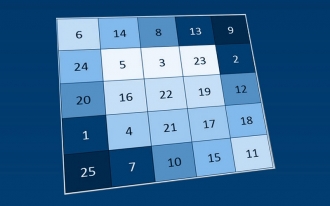
For a service built around brain trainers, that's an awkward finding. Hiding it would be pointless anyway. The Schulte table will make you faster at the Schulte table. It won't make you an analyst.
Trainers work well as a warm-up and for building the base: speed, attention to detail, the ability to hold several numbers in your head. Analysis needs that base, because when your mind is busy juggling several things at once, there's often nothing left over for checking. Still, analysis itself only grows on real questions, meaning your own numbers and your own decisions.
Before a tough problem, warm up with the Odd Word Out game: work out what links a group of words and find the one that doesn't fit.
Where to start this week
You don't need to rebuild your life. One week and two exercises, then see how it goes.
On Monday, pick one thing you "definitely understand" and write half a page explaining it. During the week, do one Fermi estimate a day while commuting. On Friday, take a decision you've been putting off and run a premortem on it. At the weekend, reread Monday's explanation. Most likely you'll find a spot you would now write differently.
If you do, your analytical thinking has already started working. If you don't, come back to the same text in a month: by then there are usually a few things you'll want to rewrite.