- BRAINTRAIN |
- Blog |
- Memory |
- How Not to Forget Information: Methods That Work





Artem Ivanchenko 09.09.2026 140 Comments
You read a book, and a week later you barely remember the title. Sound familiar?
You studied for an exam, and half of it vanished the moment you sat down. You met someone at a party, and a minute later you cannot recall their name. The question of how not to forget information troubles far more than just students. Your brain forgets constantly, and that is its normal job, not a malfunction. The good news is that forgetting can be managed. Below are concrete methods that actually work, with no mysticism and no promises of a "photographic memory in five minutes".
Want to test yourself right now? Try the online brain trainer →
Why does the brain forget information?
Back in 1885, German psychologist Hermann Ebbinghaus described what we now call the forgetting curve. He memorized meaningless syllables and checked how much he retained after different intervals. The results were not encouraging.
Within the first hour after learning, a person forgets about half of the new material. After a day, roughly 30–40% remains. After a week, often less than a fifth. And this is not because memory is bad. This is how any healthy brain works: it filters out what it considers unnecessary.
Why does this happen? The brain judges the importance of information by a simple rule — how often you come back to it. Read something once and forget it for a month, and the signal is "this does not matter, safe to erase". Return to it several times, and the signal becomes "this will be useful, store it more securely". To understand the storage mechanism itself, it helps to look at what memory is and how it is organized across short-term and long-term storage.
How not to forget information: 5 methods that work
Now to the practice. Here are five techniques that genuinely keep information in your head instead of just sounding good.
1. Spaced repetition
The main weapon against forgetting. Instead of cramming everything at once, you return to the material at growing intervals: today, tomorrow, in three days, in a week. Each repetition "resets" the forgetting curve and makes the memory trace stronger.
2. Active recall
Rereading your notes for the tenth time is almost useless. The brain recognizes the text and assumes it knows it. But recognition and recall are different things. Close the book and try to reproduce the material from memory. Hard? That is exactly the moment your memory strengthens.
3. Associations and images
Dry information is easy to forget; a vivid image is not. Tie the new to what you already know. Want to remember the name Roman — picture the Roman Colosseum next to the person. The brain holds absurd, emotional links best of all.
4. Explain it to someone
Physicist Richard Feynman's method: if you cannot explain a topic in simple words, you do not understand it. Try telling the material as if to a child. The gaps in your knowledge will surface instantly — and those are exactly what you need to work on.
5. Sleep
Memory consolidates during sleep. It is at night that the brain moves what you learned during the day from temporary storage into long-term storage. Skimp on sleep, and half of your daytime effort goes to waste. This is not a life hack, it is biology.
The best way to improve your result is practice. Start training right now →
Spaced repetition — the main weapon against forgetting
Since this method is the most powerful, let us look at it in more detail. The idea is simple: repeat the material exactly when you are about to start forgetting it. Not earlier (a waste of time) and not later (you will have to relearn it).
A working schedule for new material looks like this:
- First repetition — the same day, a few hours later.
- Second — the next day.
- Third — after 2–3 days.
- Fourth — after a week.
- Fifth — after 2–3 weeks.
After the fifth or sixth repetition, the information moves into long-term memory and stays for months. This is exactly the principle behind Anki flashcards, used by doctors and polyglots. And the same logic drives trainers built on sequence and position recall — for example, Battleship, where you hold a map of objects in your head, or Knight's Move for remembering a path. Regular practice here works just like spaced repetition for study material.
Tips: what helps and what hurts memory
Briefly, about what actually affects the result.
Helps:
- Break a large volume into small chunks of 20–30 minutes.
- Study with a fresh mind, not at two in the morning before an exam.
- Take breaks — during them the brain keeps processing information.
- Say the material out loud or write it down by hand.
- Train concentration separately: focused attention means higher-quality memorization.
Hurts:
- Multitasking — a phone next to you eats up to 40% of learning efficiency.
- Passive rereading without trying to recall.
- Cramming in a single session the night before a deadline.
- Chronic sleep deprivation and stress — they literally block memory consolidation.
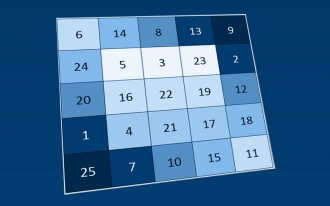
By the way, attention and memory are directly linked: you cannot remember something you never properly paid attention to. We covered this in more detail in the article How to Be Attentive. Exercises for searching and quickly shifting your gaze help build concentration — the classic here is the Schulte tables.
Mistakes that make information slip away
The most common failures are not about bad memory but about the wrong approach.
- Learning everything at once. The brain is not a tank you can fill with knowledge overnight. Short-term memory capacity is limited.
- Relying on rereading. The feeling of "I know this" is deceptive — it is recognition, not recall.
- Not repeating at all. One-time learning is almost guaranteed to vanish within a week. That is the forgetting curve again.
- Ignoring sleep. A sleepless night before an exam destroys exactly what you studied.
- Not using what you learned. Knowledge you do not apply gets filed into the archive. Practice is the best repetition.
Memory is a skill, not an inborn talent. It can be trained like a muscle. Systematic memorization exercises show a noticeable effect within a few weeks — there is a separate breakdown in How to Train Your Memory Every Day. And for regular practice it is handy to keep a set of memory trainers nearby.
Regular training gives the best effect. Start today →
Frequently asked questions
Why do I forget information almost immediately?
That is how the forgetting curve works: within the first hour the brain drops up to half of new material if you do not return to it. This is normal. The problem is not your memory but the absence of repetition.
How many times do I need to repeat something to remember it long-term?
Usually 5–6 repetitions with growing intervals — from the same day to several weeks — are enough. After that the information settles into long-term memory.
Can memory be improved in adulthood?
Yes. The brain retains neuroplasticity throughout life. Regular memorization and concentration exercises produce results at any age; after 25–30 you just need a little more consistency.
Is it better to study in the evening or in the morning?
In the morning the brain is fresher and absorbs new material better. But if you learn something right before bed and go to sleep, consolidation during sleep works better. Ideally, combine them: new material in the morning, repetition in the evening.
Conclusion
The question of how not to forget information comes down to one simple truth: the brain keeps what you return to. Do not try to beat the forgetting curve by cramming — work with it. Spaced repetition, active recall, associations, explaining out loud and proper sleep — this set is enough to hold almost anything in your head.
Memory can be trained. Start small: take one technique from this article and apply it today. In a few weeks the difference will be noticeable.