- BRAINTRAIN |
- Blog |
- Memory |
- How to Train Your Memory Every Day: Simple Exercises That Actually Work




Artem Ivanchenko 14.05.2026 1095 Comments
It happens: you walk into a room and forget why. You put your keys "in their place" and spend twenty minutes looking for them. A familiar phone number slips your mind right before dialing. No, this isn't "just old age" or "I'm always this distracted." It's a signal: your brain needs training.
The good news is that memory is not fixed. It can be improved at any age if you practice regularly and correctly. In this article, we cover specific methods, exercises, and habits that yield results.
Want to check yourself right now? Try an online brain trainer
Why Memory Declines and What to Do About It
The brain is like a muscle. If you don't challenge it, it "relaxes." Routine, a lack of new impressions, and constant scrolling instead of active thinking gradually reduce the ability to remember.
A few more factors that really matter:
- Chronic sleep deprivation. During sleep, the brain "sorts" and consolidates information. Without proper sleep, new knowledge simply doesn't stick.
- Stress. High doses of cortisol literally "erase" short-term memory.
- Passive content consumption. Videos, podcasts, news feeds — we consume but don't process. The brain isn't training.
- Lack of physical activity. Even 20 minutes of walking daily improves brain blood flow and memory.
Knowing the causes makes it easier to understand which direction to take.
Spaced Repetition Method: How to Remember and Not Forget
Most people learn something once and are surprised they don't remember it a week later. This is normal; that's how short-term memory works.
To move information into long-term memory, you need repetition at the right intervals. Here is the basic scheme:
- Learn → repeat after 1 day
- Repeat → next time after 3 days
- Repeat again → after 7 days
- One more time → after 21 days
This isn't magic — it's neurobiology. Each repetition strengthens the connections between neurons.
How to apply in practice: If you want to remember new words, facts, or dates, write them down and return to them using this scheme. Or use special apps for spaced repetition (like Anki).
Mnemonics: How to Remember Complex Things Easily
Mnemonics are techniques that "hook" new information onto what you already know. The brain remembers images, emotions, and associations better than raw facts.
Method of Loci (Memory Palace)
Imagine a familiar place — your apartment or commute — and "place" the items you need to remember along the way. When you need to recall them, simply "walk" through this route in your mind. Ancient orators used this method to memorize entire speeches.
Acronyms and Rhyming
"Every Good Boy Deserves Fun" — a classic. Create your own for any list you need to remember.
Association Method
For a new word or name, find something similar to a familiar word and create an absurd image. The funnier and brighter it is, the better it will be remembered.
The best way to improve results is practice. Start training right now
Daily Habits for Memory Training
The most effective workouts are those built into a normal day. No need to set aside separate time "for memory." Here is what actually works:
In the morning: Don't reach for your phone immediately. Give your brain a few minutes to "warm up" — think about your plans for the day, try to remember a dream, or just observe your thoughts.
On the go: Instead of music or a podcast, try to recall the details of yesterday in chronological order. What did you eat for breakfast? Who did you talk to? What did you read? This is a simple but powerful exercise for activating memory.
In the evening: Before bed, do a brief "summary" of the day. 3–5 minutes to mentally review key moments. No notes, just memory.
Weekly: Learn something new. A new foreign word, a recipe, or a new route. Novelty is the best stimulus for the brain.
Exercises to Develop Memory at Home
Here are specific exercises — no extra equipment, simple and effective:
- "10 Items": Make a list of 10 random items, read them carefully for 2 minutes, put them away, and try to recall them. The first time you might get 6–7. After a month of regular practice, you will get all 10.
- Countdown: Count backward in your head from 100 to 1 by threes: 100, 97, 94, 91... It sounds simple, but it challenges the brain significantly.
- "Where Is Everything": Before leaving a room, mentally note 5 items and their locations. When you return, check yourself.
- Reading and Retelling: Read a paragraph or a short article and retell the essence in your own words, aloud or mentally. Not word for word, but the core meaning. This activates both memory and understanding.
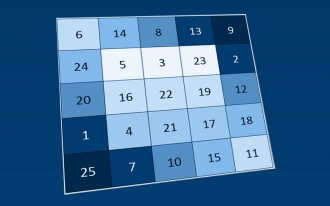
- Online Brain Trainers: Special exercises designed with cognitive functions in mind. For example, the Memory trainer develops visual memory, while Matrix trains spatial memory. Progress is visible immediately.
Tips: What Helps and What Hinders
What helps train memory:
- Regular sleep (7–8 hours, no oversleeping on weekends)
- Physical activity — even walks
- Reading books (not just social media posts — books require a completely different level of concentration)
- Social contacts — conversations, discussions, learning together
- Meditation or mindful breathing practice (5–10 minutes a day lowers stress levels)
What hinders:
- Chronic stress without recovery
- Alcohol in regular doses
- Excess sugar and processed foods
- Passive screen time (scrolling without purpose)
- Multitasking — it doesn't increase productivity; it lowers the depth of information processing
Mistakes That Negate Memory Training
- Mistake 1: "I'll do it tomorrow." The brain only trains when it happens regularly. Two weeks on and then a break means minimal effect. 10 minutes daily is better than an hour once a week.
- Mistake 2: Learning the same way. If a method isn't working, it's not your fault; the method isn't right for you. Try another approach: associations instead of mechanical repetition, or visualization instead of text notes.
- Mistake 3: Ignoring physical condition. Memory and physiology are inseparable. If you sleep 5 hours and drink 3 coffees a day just to keep going, no training will be fully effective.
- Mistake 4: Expecting instant results. The first noticeable changes usually appear after 3–4 weeks of regular practice. Not in three days. Not in a week. Give the brain time to rewire.
- Mistake 5: Training only one type of memory. There is memory for numbers, faces, words, and sequences. If you only train one, the others won't improve. It's important to rotate exercise types.
Conclusion
Memory is a skill, not a natural-born gift. It can be improved at any age with a systematic approach: spaced repetition, mnemonics, daily exercises, healthy sleep, and physical activity. The main thing is not to delay. The brain starts to change the moment you start training it.
Regular training gives the best effect. Start today
Read also: How to Improve Your Memory in 7 Days and Development of Cognitive Abilities.