- BRAINTRAIN |
- Blog |
- Attention |
- How to Develop Attention: A Practical Guide Without Fluff





Artem Ivanchenko 11.08.2026 131 Comments
Attention is not a talent you are born with. It is a skill. And any skill can be trained.
You walk into the kitchen and forget why you came. You reread a paragraph for the third time because your thoughts drifted off. You listen to someone, nod along — and a minute later you cannot recall a word. Sound familiar? Then the question of how to develop attention is not abstract for you but quite practical. And the good news: it is fixable.
Attention works like a muscle. Do not train it and it weakens. Give it regular load and it grows stronger. This article is about concrete exercises, habits and mistakes, without vague talk of "willpower".
Want to test yourself right now? Try the online brain trainer Schulte Table →
Why attention "falls apart" and what happens to it
First, let us understand what we are fighting. Attention is the brain's ability to pick out one source of information and filter out the rest. The resource is limited. The brain physically cannot hold five tasks at the same level of quality at once.
And here is where it gets interesting. The modern environment literally teaches the brain to be inattentive. Every notification, every tab switch is a micro-switch. You think you are doing several things at once. In reality the brain jumps quickly between them and loses fuel on every jump.
The result is absent-mindedness that feels normal. But it is not a life sentence. The brain is plastic: what you train, it strengthens. Train switching between screens and you become a master of distraction. Train focus and you get your concentration back.
We covered the mechanism of how the brain processes what it sees in more detail in the article Improving perception through Schulte tables.
Where to start: basic principles of training attention
Before grabbing the exercises — three principles, without which they will not work.
One focus at a time. Multitasking is a myth. Remove everything competing for attention: phone face down or in another room, extra tabs closed. This is not a trifle, it is half the result.
Short sessions, regularly. Ten minutes daily beats one hour once a week. Attention, like any skill, loves frequency, not heroics.
Gradual difficulty. Start simple, then raise the bar a week later. The brain grows at the edge of comfort, not in the "easy" zone.
Now to the specifics.
Exercises that really train concentration
Here is a set of exercises from simple to harder. Do not do them all at once — pick two or three and stick with them for a few weeks.
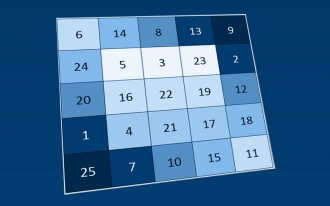
- Schulte Table. A classic of attention training. You find numbers in order within a chaotic grid as fast as possible. It speeds up search and widens peripheral vision. Five minutes a day and you will notice a difference in 2-3 weeks.
- Spot the odd one. Among a row of objects, find the one that stands out. It trains the ability to scan and compare quickly. The brain learns to hold several features at once and not "lock onto" the first option it sees.
- Comparing details. Two almost identical pictures, find the differences. Sounds like a kids' game, but it is a serious load on concentration. The Face Control trainer works exactly on this — quickly fix a face and recognize it in a stream.
- Mindful observation. Once a day pick an object — a cup, a tree outside, your own hand — and look only at it for 60 seconds. Noticed you got distracted? Calmly bring your attention back. This is training the "return" — the main muscle of attention.
- Reading without a phone. Twenty minutes of a book straight, phone in another room. At first it will be hard to sit through even five minutes. That is exactly the measure of how untrained your attention is.
The best way to improve your result is practice. Start training right now →
Tips: what helps develop attention, and what gets in the way
Exercises are half the job. The other half is the routine and environment in which attention either recovers or burns out.
What helps:
- Seven to eight hours of sleep. A sleep-deprived brain physically cannot hold focus — that is not laziness, it is biology.
- Movement. A 20-minute walk before mental work noticeably raises concentration.
- Breaks by the 25/5 rule: 25 minutes of work, 5 minutes of rest without a screen. The brain does not hold focus indefinitely.
- Water and protein instead of sugar. Sharp blood sugar spikes are the enemy of steady attention.
- One task in progress at a time. Close a task, open the next.
What gets in the way:
- Social feeds and short videos. They literally train the brain to switch every few seconds.
- Notifications. Every "ping" knocks you out of focus, and getting back takes up to several minutes.
- Background video or lyrics-heavy music during work that requires thinking.
- Chronic fatigue and working "on the last drops".
Common mistakes that make it all fail
People start training attention and quit. The reasons are almost always the same.
Mistake 1: expecting results in three days. The brain rebuilds over weeks, not over a weekend. The first shifts come after 2-3 weeks of regular practice. Quit on day five and you have not trained anything yet.
Mistake 2: training "when there is time". Time does not appear on its own. Tie the exercise to an existing habit: after your morning coffee, five minutes on a trainer. That way you will not forget it.
Mistake 3: training attention while killing it the rest of the day. There is no point spending 10 minutes chasing numbers in a table and then 6 hours scrolling a feed. One cancels out the other.
Mistake 4: chasing difficulty right away. You take the hardest level, fail, get discouraged, quit. Start with what you can do at 70-80%.
Mistake 5: monotony. One trainer every day and the brain adapts, the effect drops. Alternate different types of load: today searching for numbers, tomorrow comparing details, the day after — quickly finding a shared symbol. Varied load keeps the brain from "getting used to it" and stalling.
Frequently asked questions
How long does it take to develop attention?
The first noticeable changes come after 2-3 weeks of daily 10-15 minute sessions. A stable result sets in after 1.5-2 months. What matters is not the length of a single session but regularity.
Can an adult train attention?
Yes. The brain keeps its plasticity for life. An adult trains attention just as effectively as a child — it simply takes regularity and a bit more conscious effort not to quit.
How much time a day do you need to train?
Ten to fifteen minutes a day is enough. Longer is not necessarily better: an overtired brain holds focus worse. Short and daily beats long and rare.
Do online trainers really help?
Yes, if you practice regularly and alternate exercise types. Trainers give even, measured load and show progress right away — more convenient than inventing exercises yourself. The full set is in the attention trainers section.
Regular training gives the best effect. Start today →
Conclusion
Developing attention is entirely realistic — it is a matter of system, not talent. Remove distractions, train short but daily, alternate exercises and do not expect a miracle in three days. Within a few weeks you will notice you read without rereading, listen to the end, and forget less often why you walked into the kitchen.
Attention is the foundation that both memory and thinking rest on. Want to dig deeper into focus — read How to be attentive. And start simple: pick one exercise and do it today.