- BRAINTRAIN |
- Blog |
- Memory |
- How to Improve Short-Term Memory





Artem Ivanchenko 27.05.2026 1067 Comments
You read a paragraph and forget what it was about. You walk into a room and forget why. It is not age and it is not "just how my brain is" — it is weak short-term memory. And it can be trained like a muscle.
Short-term memory is the temporary buffer in your head where you hold a phone number while dialing it, or a shopping list while walking to the store. When it works poorly, everything suffers: work, study, daily life. Let us figure out how to improve short-term memory without pills or complex techniques — with concrete exercises that actually work.
A heads-up: there will be no miracles in one day. The first shifts appear after 2–3 weeks of daily short training sessions. But the results are stable.
Want to test yourself right now? Try the online brain trainer →
What short-term memory is and why it is "short"
Short-term memory (also called operational or working memory) holds information for 15–30 seconds. Its capacity is roughly 7 elements plus or minus 2. That is the famous formula by psychologist George Miller, and it has not changed since 1956.
What does this mean in practice? If I read out 10 random digits to you, you will remember around 5–9. More than that is rare. And after 30 seconds without repetition, they disappear.
But "elements" is a flexible concept. The digit 7 is one element. The number "1956" is also one element if you perceive it as a year. Combining small bits into larger meaningful blocks is called chunking. It is the first and most powerful hack we will discuss below.
Why your short memory works worse than it could
There are three main reasons here, and all three are about habit, not "bad genetics".
Information overload. You read your social media feed while listening to a podcast and glancing at a chat. Your brain cannot process it and discards almost everything. What is left is the feeling of "scrolled for three hours — I do not remember a thing".
Weak attention. You only remember what you paid attention to. If you read a page but were thinking about something else, no surprise it did not stick. That is why improving short-term memory always starts with training concentration. As we discussed in the article How to be attentive, memory does not engage without attention.
Lack of sleep. Less than 6 hours and working memory drops by 20–30%. This is not even a debatable issue — it has been confirmed by hundreds of studies.
How to improve short-term memory: 7 working methods
1. The chunking method — group your information
Instead of memorizing a phone number as 0-9-7-3-4-5-6-7-8-9, break it into blocks: 097-345-67-89. Instead of 11 digits — 4 groups. Much easier for the brain.
The same principle works with words, ideas, access codes, passwords. Look for meaningful clusters in the flow of information and remember those, not separate bits.
2. Active spaced repetition
Do not cram. Read something important — repeat it after 1 minute. Then after 10 minutes. Then after an hour. Then after a day. This is the classic interval scheme used in language learning, medicine, law — anywhere something needs to be firmly fixed.
3. Visual associations
You need to remember a shopping list: milk, bread, eggs, cheese. Picture this: you walk into the store and a giant milk carton on the shelf hits you with a loaf of bread, from which eggs covered in cheese spill out. Absurd — and that is exactly why it sticks.
The brain latches onto vivid images hundreds of times better than dry lists.
4. The method of loci (memory palace)
Picture your apartment. Place the items you need to remember in specific spots: by the door, on the nightstand, on the couch, in the kitchen. When you need to recall — mentally "walk" through the apartment and "pick them up".
This is the technique used by memory champions. It works because the brain stores spatial information beautifully — that is its evolutionary base function.
5. Say it out loud
You read, heard, saw something — say it out loud. Three channels activate at once: sight (reading), hearing (you hear your own voice), motor activity (mouth works). Information sticks much more reliably.
6. Write by hand
Not on a keyboard — by hand. Studies from Princeton University back in 2014 showed: students who took notes with a pen recalled material better than those who typed. Handwriting forces the brain to process information rather than stenograph it.
7. Train daily for 10–15 minutes
Not "when I have time". A routine. A muscle you do not use atrophies — same with memory.
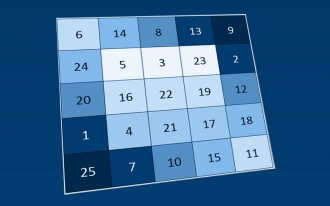
The most convenient option is short sessions on online trainers. Matrix trains exactly the capacity of short-term memory: cells flash on the screen and you repeat them. Could not be simpler, and the effect over 2–3 weeks is stable. The best way to improve your result is practice. Start training right now →
Tips: what helps and what hurts your memory
Helps:
- Sleep of 7–9 hours. During the deep phase, the brain transfers data from short-term to long-term memory
- Aerobic activity 3 times a week. 30 minutes of walking or running — blood flow to the hippocampus
- Omega-3, nuts, fish, blueberries, greens. Not magic, but building material for neurons
- Breaks between tasks. The brain is not "multi-core" — it switches, and every switch costs energy
- Regular work with memory trainers
Hurts:
- Chronic multitasking on your phone. This is the slow cultivation of scattered attention
- Alcohol. Even small doses hit short-term memory the same night
- Chronic stress. Cortisol kills neurons in the hippocampus — the memory center
- Working with background content (videos, music with lyrics). It seems you are "just listening" — in reality, the brain is split
- Sugar in large amounts. Glucose spikes impair cognitive functions
Typical mistakes by people who want to improve their memory
Mistake 1. "I will read a book about memory and it will get better." It will not. Memory improves through practice, not theory. You will read the book — and in two weeks forget 80% of its content. Ironic, but true.
Mistake 2. Training once a week for an hour. This is worse than 10 minutes daily. The brain needs frequency, not volume.
Mistake 3. Relying on "nootropics" and supplements. Most such products have no evidence base. Those that do work only on people with genuine deficiencies. They do nothing for a healthy brain.
Mistake 4. Trying to remember everything. That is the road to overload. Learn to filter: what truly needs to stay in your head and what should be written down and forgotten.
Mistake 5. Giving up after the first week. The visible effect comes in 14–21 days. Those who quit earlier robbed themselves.
FAQ
How many days does it really take to improve short-term memory?
First noticeable changes after 2–3 weeks of daily 10-minute training. A stable result you feel in everyday life — after 1.5–2 months. It is not fast, but it is real.
Is it true that memory starts declining after 30?
The natural decline exists but is very slow — and training fully offsets it. The brain retains plasticity into old age. Most "age-related" memory problems are not about age but about lack of cognitive load.
Which trainers best target short-term memory?
The classics — Desktop for pair memorization, Matrix for position memorization, Battleship for holding spatial data. Any exercise where you briefly hold information and immediately use it works on operational memory.
Do crosswords and sudoku help?
Moderately. They train specific skills — vocabulary or logic. But if you want to deliberately develop working memory, specialized exercises give faster and more measurable results.
Conclusion
You can improve short-term memory — and it is not hard if you know what to do. Combine chunking, spaced repetition, visual associations and regular short training — and in 3 weeks you will feel the difference. Add sleep, movement and less phone time, and you will get not only better memory but clearer thinking overall.
The main thing is to start and not stop. 10 minutes a day is less than one TikTok video. And the benefit lasts for years.