- BRAINTRAIN |
- Blog |
- Brain Development |
- How the Brain Makes Decisions: What Happens Before You Choose




Artem Ivanchenko 24.07.2026 136 Comments
A decision is born in the brain before you realise you are choosing. Sometimes a third of a second earlier.
You stand at a shelf and spend five minutes choosing between two identical chargers. Then you spend ten seconds accepting a job that will shape the next three years of your life. Strange? Not really. That is how the head works. It is worth understanding how the brain makes decisions if only to stop blaming yourself for indecisiveness or impulsiveness. A choice is not an act of pure will. It is the work of several brain regions that constantly argue with each other and almost always try to save energy.
Below we will look at what happens in the head at the moment of choice, why evening decisions are worse than morning ones, which thinking traps your own nervous system sets for you, and how to train the ability to choose faster and more accurately.
Want to test yourself right now? Try the online brain trainer →
How the brain makes decisions: what happens in a fraction of a second
Start with the mechanics. Information enters through the senses and almost immediately reaches the hippocampus, the region responsible for memory. It instantly searches for similar episodes from the past: I have seen this before, and it ended badly.
In parallel the amygdala switches on. This is the emotional filter. It labels an option as dangerous or pleasant before you have had time to think anything through. That is why a person sometimes says something feels wrong but cannot explain why. There is a reason, it simply formed before the words did.
Only after that does the prefrontal cortex join in, the part that weighs, compares consequences and inhibits impulses. It is the slowest region and the most expensive in terms of energy. Meanwhile the dopamine system evaluates the expected reward. Not the pleasure itself, but the forecast of pleasure. This is why the brain regularly picks not the best option but the one promising a faster result.
In 1983 neurophysiologist Benjamin Libet demonstrated something uncomfortable. The readiness potential, the electrical activity preceding a movement, appears roughly 550 milliseconds before the action itself. Awareness of the intention to move a finger arises only about 200 milliseconds before it. The gap is around a third of a second during which the decision already exists while you still know nothing about it. The interpretation of this experiment is still disputed, but the basic fact holds: a noticeable part of a choice happens before awareness.
Why the brain takes the fast route: system 1 and system 2
Nobel laureate Daniel Kahneman described two systems of thinking, and it is the most convenient model for understanding choice.
System 1 is fast, automatic and effortless. What is 2+2? The answer appeared on its own. Who is on the banknote? Same thing. This system handles most everyday decisions and does it in milliseconds.
System 2 is slow, analytical and expensive. What is 17×24? Here you had to strain, and if you were walking at that moment you probably slowed down.
Why does the brain cling to the first system? It makes up about 2% of body mass while consuming up to 20% of all your energy. It is the most expensive organ in the body, and evolution taught it to economise. So the cheap automatic mode runs by default, and analysis kicks in only when there is no other way.
A classic test. A racket and a ball cost 110 together. The racket costs 100 more than the ball. How much is the ball? Most people instantly answer ten. The correct answer is five. System 1 handed over a neat number and system 2 never even switched on.
Decision fatigue: why your evening choices are worse
Noticed that at ten in the morning it is easy to skip dessert, but at nine in the evening your hand reaches for the fridge on its own? That is not weakness of character. It is the depletion of self-control that psychologists call decision fatigue.
The mechanism is simple: the prefrontal cortex behaves like a muscle. The more small choices you made during the day, what to wear, whom to reply to, which plan to pick, the less fuel remains for serious decisions. The brain then falls into two default modes: agreeing to everything just to be left alone, or doing nothing and postponing until tomorrow.
The best known study on this is the 2011 Israeli work on parole rulings: the share of favourable verdicts was high at the start of a session and dropped almost to zero before a break. To be honest, that work was seriously criticised because the order in which cases were heard may not have been random. But the effect itself is confirmed in simpler settings too, from the quality of medical prescriptions in the second half of a shift to supermarket purchases at the end of a long shopping trip.
The best way to improve your result is practice. Start training right now →
Cognitive biases that ruin a choice
Cognitive biases are systematic failures of thinking. Not random errors but predictable traps that catch practically everyone. Here are the ones that damage decisions most often.
- Anchoring. The first number you hear shapes every later estimate. You see a price tag of 3000 reduced to 1800 and 1800 feels like a bargain, even though the item is really worth 1500.
- Confirmation bias. The brain collects arguments supporting what it already believes and ignores the opposite ones. You pick a car and suddenly every review of it is positive.
- Sunk cost effect. I have already put two years into this project, I cannot quit now. What is spent cannot be recovered, and a decision should be based on the future rather than the past.
- Loss aversion. Losing 1000 hurts roughly twice as much as finding the same 1000 feels good. That is why people hold on to bad positions just to avoid recording a loss.
- Choice paralysis. The more options there are, the harder it is to choose and the less satisfying the result feels. Twenty offers paralyse far more than three.
Knowing about biases does not make you free of them. But it gives you a pause, and the pause is exactly the moment when the prefrontal cortex manages to switch on.
Tips: what helps you decide better
Now the practical part. What actually works:
- Remove small decisions from your day. The same breakfast, clothes prepared in advance, a fixed time for email. Every automated decision is fuel saved for the important ones.
- Do the important things before lunch. During the first three to four hours after waking the prefrontal cortex performs at its best. Schedule difficult conversations and large sums there.
- The 10/10/10 rule. How will I feel about this decision in 10 minutes, 10 months and 10 years? Three different answers quickly reveal whether it really matters.
- Cut the option list down to three. Deliberately discard everything except the three best candidates and choose among them. The brain handles three easily and fifteen not at all.
- Set a deadline for thinking. I decide by Friday. Without a time limit the brain will shuffle options endlessly because that feels like work.
- Sleep. One night of poor sleep degrades risk assessment about as much as a moderate dose of alcohol. A decision made at two in the morning is almost always worse than a morning one.
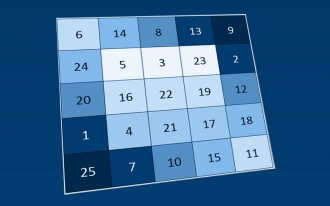
Training deserves a separate point. Speed and accuracy of choice can be improved like any other cognitive skill. Tasks that force you to compare options and pick the right one within a time limit load exactly the mechanism that works during real decisions. Good options here are Anglesum for weighing numeric alternatives quickly and Sorter for decisions under time pressure. A wider set of logic tasks is collected in the thinking trainers section.
Mistakes almost everyone makes
And now about what gets in the way.
- Gathering information endlessly. Past a certain point new data does not improve the decision, it only delays it. If you are reading the tenth review of one model, you are no longer analysing, you are stalling.
- Deciding on emotion and calling it intuition. Intuition is compressed experience in a field where you have practice. An experienced doctor has intuition in diagnostics. In a field where your experience is zero, the inner voice is just fear or desire.
- Asking everyone for an opinion. Five pieces of advice from people with different backgrounds add noise rather than clarity and trigger the very choice paralysis described above.
- Mistaking the absence of a decision for caution. Not deciding is also a decision, just one made for you by circumstances.
- Judging a decision by its outcome. A good decision can produce a bad result, because randomness exists. Judge the process instead: did you have the data, did you consider alternatives, were you acting while exhausted.
Many of these mistakes grow from one root, from postponing. We covered the mechanics of procrastination in detail in the article How to remove laziness from the brain, and systematic approaches to analysis are collected in Methods of developing thinking.
Frequently asked questions
How many decisions does a person make per day?
There is no exact figure, and the popular number of 35 thousand has no scientific backing. What is clear is that the overwhelming majority of choices are made automatically, without conscious involvement. Truly complex conscious decisions add up to only a few dozen per day.
Can you learn to decide faster?
Yes. Speed of choice depends on two things: how well the brain holds options in working memory and how quickly it compares them. Both improve with timed comparison and sorting tasks, which is standard material for cognitive trainers.
Why is it better not to make hard decisions in the evening?
Because of decision fatigue: by the end of the day the prefrontal cortex has been drained by hundreds of small choices. In that state the brain more often accepts the first available option or avoids choosing altogether. Morning gives you the same brain in far better shape.
Do emotions always interfere with decisions?
No. People with damage to the emotion-related regions of the brain lose the ability to choose at all; they can weigh options for hours and reach no conclusion. Emotions assign weight to criteria. What harms a choice is not emotion itself but strong affect at the moment of deciding.
Conclusion
Now it is clear how the brain makes decisions: memory and emotion quickly form a preliminary verdict, then the prefrontal cortex either agrees with it or manages to intervene. The less energy you have, the smaller the chances of that second stage. So the main work is not about thinking harder at the moment of choice but about preparing the conditions: sleep enough, cut the number of small decisions, set a limit on deliberation and know your typical traps.
The rest is a matter of practice. The brain learns to compare options faster when you give it that kind of load regularly.