- BRAINTRAIN |
- Blog |
- Attention |
- Distracted Attention: Causes and Solutions





Artem Ivanchenko 24.08.2026 151 Comments
You sit down to work, and two minutes later you are scrolling a feed. Sound familiar? Distracted attention is not laziness or a weak character. It is a state with clear causes and solutions.
Distracted attention is when the brain cannot hold focus on one task for longer than a few minutes. Thoughts jump, you latch onto every sound or notification, and by evening you feel you got little done even though you are exhausted. Below we break down the real causes of distracted attention and step-by-step solutions that actually work, not just the advice to ''try harder''.
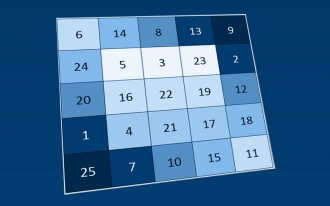
Want to test yourself right now? Try the Schulte Table online trainer →
What distracted attention is and why it happens
Attention is a resource. Limited, like a battery charge. The brain physically cannot process ten streams of information equally well at once. When you try to, it just switches quickly between tasks — and every switch burns energy.
Picture a typical scene. You open a document to finish a report. A minute later you remember you need to reply to a colleague. You open the chat, and there are three more messages. While reading, a bank notification lands. You check it. You go back to the report, and you cannot remember where you left off. It takes another few minutes just to recover the thought. That is the cost of distraction: not only lost time, but the constant feeling that you are running yet standing still.
Here is where the trap hides. It feels like you are working in parallel. In reality the brain keeps jerking back and forth, and each jerk costs a few seconds to ''get back into context''. A dozen such switches an hour, and focus falls apart while fatigue piles up with nothing to show for it.
Distraction is not a breakdown. It is a signal that the conditions for concentration are broken: the brain is overloaded, or short on sleep, or trained over years to get distracted.
One more thing people often miss: attention has a natural rhythm. The brain is not built to hold maximum focus for hours on end. After 40–90 minutes of intense work, concentration drops on its own, and that is normal. The problem is not that attention dips, but that we do not let it recover and instead flood it with a feed that tires it even more.
The main causes of distracted attention
Usually several causes hit at once and reinforce each other. Here are the most common.
- Sleep deprivation. Even one night of 5 hours noticeably cuts your concentration the next day. A sleep-starved brain cannot filter out the noise.
- Chronic multitasking. When you spend years working with a dozen open tabs while replying in a messenger, the brain gets used to constant switching and forgets how to go deep.
- Digital overload. Hundreds of notifications a day train the brain to grab every new stimulus.
- Stress and anxiety. When an unsolved problem runs in the background of your mind, it eats part of your attention even when you are not consciously thinking about it.
- No training. Concentration is a skill. If you do not use it, it weakens like a muscle with no load.
Notice this: most of these causes are not about character. They are about routine and environment. Which means you can change them.
How the digital environment destroys concentration
Social feeds and apps are designed so you cannot tear yourself away. Infinite scroll, autoplay, red notification dots — all of it runs on one mechanism: a tiny hit of dopamine for every new stimulus.
The brain learns fast. After a few weeks of this ''feed'' it starts demanding a new stimulus every few seconds. And when you sit down with a book or a complex report — where there is no instant reward — it becomes unbearably boring within the second minute. It is not that you got broken. It is a rewired reward system.
Ever notice how hard it is to finish a film without picking up your phone? Same effect. The brain is used to a new stimulus every few seconds, so even an interesting movie feels ''slow'' to it. The more short videos and feeds you consume, the shorter your natural attention span becomes.
The good news: it can be rewired back. The brain is plastic at any age. We covered how daily habits shape focus in the article Top 5 Habits for Concentration.
The best way to improve your result is practice. Start training your attention right now →
How to get focus back fast when attention has already scattered
Sometimes you need to pull yourself together right now, but your head is a sieve. Here is a simple 5-minute sequence that brings you back into working shape.
- Remove the trigger. Close extra tabs, flip the phone over, mute the sound. In 20 seconds you have already cleared half the distractions.
- Give the brain one goal. Not ''do some work'', but specifically: ''write the first paragraph''. A small clear goal holds attention better than a vague task.
- Set a timer for 10 minutes. Agree with yourself to do only this and only until it rings. A short distance does not scare the brain, and getting into the task is easier.
The secret is that focus does not switch on by willpower. It switches on when you have removed the obstacles and given the brain one simple anchor. The rest follows on its own.
Tips: what helps gather attention and what gets in the way
Now the specifics. Here is what actually works against inattention.
What helps:
- One task at a time. Close every tab but the one you need. Phone face down in another room.
- Work in 25-minute blocks with short breaks. The brain gathers itself more easily when it knows rest is near.
- Sleep 7–8 hours. This is the base without which the rest barely works.
- Regular short concentration exercises — attention trainers literally restore your ability to focus. Pick any of the attention trainers and give it 10 minutes a day.
- A screen-free pause. A walk or five minutes staring out a window restores attention better than scrolling ''to relax''.
What gets in the way:
- Notifications. Each one is an invitation to get distracted. Turn off everything but the critical.
- Scrolling ''for five minutes'' before a hard task. It revs the brain up on fast stimuli, and then focusing is twice as hard.
- Coffee instead of sleep. Caffeine masks fatigue but does not remove it. The distraction stays put.
- Trying to ''just force yourself''. Willpower runs out. It is easier to remove distractions than to fight them by force.
Common mistakes when fighting distraction
People tend to make the same missteps that only make things worse.
- Waiting for motivation. Concentration does not arrive on its own from a good mood. It is trained by action. Start, and focus will catch up.
- Wanting everything at once. Trying to live perfectly starting Monday usually breaks by Wednesday. One small change that sticks is better.
- Confusing fatigue with distraction. Sometimes the brain is not scattered, just drained. It needs sleep and a pause, not another ''life hack''.
- Ignoring the body. Hunger, dehydration, a stuffy room — all hit concentration harder than you think.
If you want to dig deeper into holding focus in everyday situations, read the article How to Be Attentive.
Frequently asked questions
Is distracted attention a disease?
Most often no. It is usually the result of sleep loss, stress and digital overload, and it clears up once you remove the cause. But if inattention has sharply worsened and interferes with life for months, see a doctor to rule out medical causes.
How long does it take to get concentration back?
The first shifts are noticeable within 2–3 weeks of regular exercises and proper sleep. A stable result comes in 1.5–2 months if you keep at it.
Do online trainers help against distraction?
Yes. Attention exercises make the brain hold focus under light time pressure, and gradually that ability carries over to work and study. Regularity matters more than the length of a single session.
Is multitasking really harmful?
For complex tasks, yes. The brain does not run in parallel, it switches, and every switch costs time and attention. One task at a time is almost always faster and better.
Conclusion
Distracted attention is not a verdict or a personality trait. It is a state where the brain is overloaded, short on sleep, or out of the habit of focusing. Remove the distractions, fix your sleep, work in single-task blocks, and add regular concentration exercises. Within a few weeks you will notice the difference yourself.
Regular training gives the best effect. Start today →